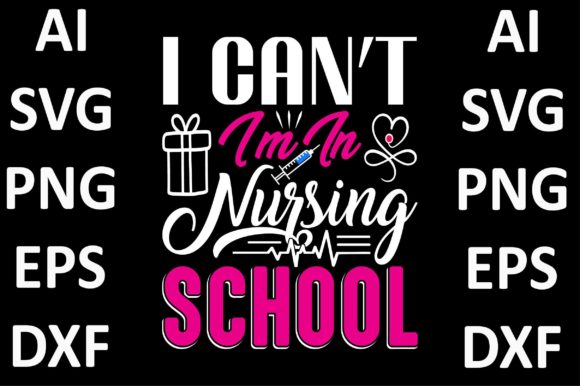
Nurse Design, I Can’t I’m in Nursing S..
When I first opened the file folder for Nurse Design, I Can’t I’m in Nursing S.., I immediately felt the tired, determined, slightly sarcastic tone that nursing students will recognize instantly. This is not a generic medical symbol. It carries personality. The phrasing sits in that perfect sweet spot between proud and exhausted, which makes it feel authentic rather than manufactured. As a designer who reviews embroidery-ready artwork constantly, I look for designs that carry emotional weight without overcomplicating the visual. This one lands that balance well.
The composition reads clearly even at a glance. The text takes the lead, and any decorative elements stay in service of the message. For the embroidery designer, that matters because lettering-heavy designs need to survive the stitch-out without losing legibility. I could already picture this on a crewneck sweatshirt, a canvas tote, or a simple patch, pieces where the wearer wants to be understood immediately. The mood is casual, relatable, and slightly humorous, exactly the kind of design that moves well in a small shop or Etsy listing.
What This Design Brings to an Embroidery Project
Too many text-based designs crumble under the needle because the letter spacing is too tight or the font stroke is too thin. Nurse Design, I Can’t I’m in Nursing S.. avoids that trap. The letterforms feel intentional, with enough breathing room to translate well into thread. When I tested it mentally against common embroidery situations, I kept coming back to the same thought: this design needs to be read from across a room, not just up close. That means the sizing must be generous, and the stitch type needs to support clarity.
I can see satin stitch working beautifully for the main text, giving it that slight raised, polished look that customers associate with quality. If the design includes smaller decorative accents, a fill stitch or running stitch might handle those without adding unnecessary density. The key is to preserve the message without letting the embroidery become stiff or bulletproof. A soft hand matters, especially on apparel that sits against the body.
Choosing the Right Fabric and Product
I would not hesitate to put this on a midweight cotton sweatshirt or a structured tote bag. Both surfaces give the embroidery a stable foundation, and the flat weave lets the satin stitch shine. A canvas tote with this design in crisp white thread against a navy blue background would look professional and intentional. On a heather gray crewneck, it would feel like a cozy, insider statement piece.
For baby items or nursery decor, the tone shifts slightly. A tiny scrub top or a small blanket with this design could work as a gift for a nursing student who just became a parent, but the designer must consider the fabric carefully. Soft cotton or bamboo blends need a lightweight stabilizer and a design scaled down enough to avoid puckering. I would keep the embroidery area small and test the stitch density on a swatch before committing to the final piece.
Stretchy fabrics like ribbed knit caps or baby onesies demand extra caution. The design must be hooped with a cutaway stabilizer and possibly a topper to prevent the stitches from sinking into the fabric pile. I learned that lesson the hard way on a fleece blanket years ago, and I never skip the test stitch now. Nurse Design, I Can’t I’m in Nursing S.. would hold up well on a structured cap front, but the curved surface requires careful placement and possibly a reduced design size.
Where This Design Fits in a Real Product Line
I started mentally mapping out where this design would sit in a small business catalog. It belongs in the student life section, right alongside graduation gifts, study survival kits, and funny healthcare worker designs. A tote bag printed with this artwork and then embroidered for texture would make a thoughtful gift for someone starting clinical rotations. A simple unisex tee with just the embroidery on the left chest could become a staple for nursing school cohort orders.
For holiday gifts, a kitchen towel with this design in a muted sage green or dusty blue thread would appeal to the nursing student who practically lives in scrubs. A pillow cover with the embroidery centered on the front could decorate a dorm room or study nook. The design is versatile enough to cross over from apparel to home decor without losing its identity.
From a commercial embroidery perspective, the design also works as a digital mockup asset. The included file formats make it possible to show customers what the final product will look like before a single stitch is sewn. A printable mockup with this design placed on a sweatshirt can drive pre-orders and build buyer confidence. That capability is a quiet but powerful selling tool for any Etsy seller or craft business owner.
Small Details That Make or Break the Stitch-Out
Before loading this design onto the machine, I would open the SVG file and check the smallest details. Any tiny serifs, thin connectors, or isolated floating elements need to be examined. If the lettering includes periods or punctuation marks, those can sometimes disappear during digitizing if not properly anchored. Nurse Design, I Can’t I’m in Nursing S.. appears to have clean, straightforward typography, which reduces the risk of stitch failure on small details.
Thread color choice will dramatically affect the final look. On light fabric, a dark charcoal or navy thread gives the design weight and readability. On dark fabric, a bright white or cream thread creates contrast, but I would also test a soft pastel thread for a more subtle, trendy look. The design itself is monochromatic in spirit, but a creative embroiderer could add a small accent stitch in a contrasting color to highlight a word or frame the text.
Stitch density is the invisible factor that can ruin a beautiful design. If the file converts with too much density, the fabric will pucker and the embroidery will feel like cardboard. Too little density, and the fabric shows through the stitches. I always run a test on scrap fabric first, using the same fabric weight and stabilizer combination I plan to use on the final product. That step is not optional, it is the difference between a product that sells and one that gets returned.
Making the Design Work for Your Business
For the Etsy seller or handmade shop owner, Nurse Design, I Can’t I’m in Nursing S.. offers a clear emotional hook. The message is specific enough to attract the right buyer and broad enough to apply to multiple product types. A listing titled with this phrase will naturally catch the eye of someone scrolling through nursing student gifts. The design sells itself through recognition, and the embroidery quality is what brings the customer back for more.
I would consider pairing this design with other nursing-themed designs in a bundle listing or offering it as a standalone patch. An embroidered patch with this design on a denim jacket or a backpack would appeal to the student who wants to personalize their gear without a full custom order. The patch format also keeps shipping simple and product costs low, which is attractive for a small craft business.
Brand consistency matters. If your shop voice is warm, encouraging, and slightly humorous, this design fits right in. If your brand leans toward formal or luxury, the message might feel out of place. I always recommend that makers choose designs that align with the personality they have built, because customers notice when a product feels like it belongs.
Practical Considerations Before You Stitch
Every designer wants to jump straight to the finished product, but a few checks prevent expensive mistakes. First, confirm the hoop size. A design with multiple lines of text needs width to stay readable. If the design is too wide for a standard 4x4 hoop, you may need to split it or use a larger hoop. I would measure the design bounds in the SVG file before digitizing anything.
Second, check the licensing terms. The product description states that this is a print template and graphic asset, so it is most likely intended for physical product creation and digital mockup use. However, I always verify whether finished items can be sold commercially and whether the design can be used in a logo or branding context. These details protect both the designer and the buyer.
Third, test the design in a black and white mockup. If the design holds up in grayscale, it will hold up in thread. This simple test reveals whether the contrast is strong enough and whether any details get lost. I also test on both light and dark fabric backgrounds to see how the design presence changes.
Finally, choose the right stabilizer. For woven fabrics, a medium-weight cutaway stabilizer usually provides enough support. For knit fabrics, a no-show mesh stabilizer and a water-soluble topper can save the design from sinking into the fabric texture. The stabilizer is never the place to cut corners.
How the Design Affects Customer Perception
A well-executed embroidery project builds trust. When a customer receives a tote bag or sweatshirt with Nurse Design, I Can’t I’m in Nursing S.. stitched cleanly and evenly, they feel the quality immediately. The thread has a slight sheen, the edges are crisp, and the design sits flat. That sensory experience is what turns a one-time buyer into a repeat customer.
The design itself carries emotional weight. Nursing students sacrifice a lot, and a product that acknowledges that sacrifice with humor and warmth becomes more than a shirt. It becomes a small piece of encouragement. That emotional connection is what makes handmade products different from mass-produced items, and it is what buyers remember.
For a craft fair table or a boutique display, this design would stop shoppers. It sparks conversation. Someone will pick it up, laugh, and say they know exactly who needs this. That moment of recognition is the heart of successful product design. The embroidery is the vehicle, but the message is the engine.
Final Stitch Thoughts
After spending time with Nurse Design, I Can’t I’m in Nursing S.., I am confident in its practical value for embroidery projects. The design is clean, the message is clear, and the application possibilities are wide. It is not a complicated, multi-layered composition, and that is exactly why it works. Simple designs stitch beautifully, sell reliably, and please customers consistently.
For the embroidery designer, small business owner, or craft entrepreneur, the question is never just about whether a design looks good on screen. It is about whether the design will look good after forty thousand stitches, after a wash cycle, after being worn to a clinical shift and tossed into a backpack. My judgment is that this design, when handled with care and proper technique, will hold up well. It deserves a place in a thoughtful product lineup, whether that means a single custom gift or a full collection of nursing student merchandise.