World s Best Nurse SVG Cut File: A Designer's Take
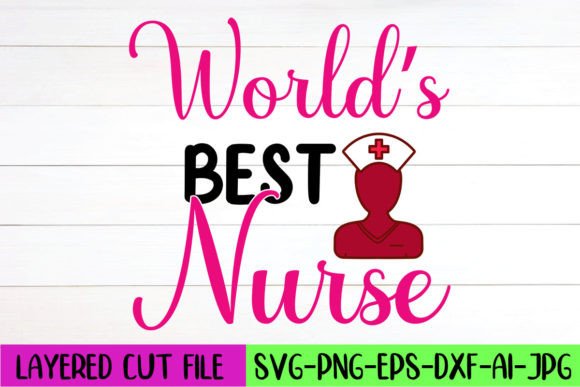
Last week, I sat down with a stack of blank canvas tote bags and a tight deadline. A local hospital auxiliary had ordered twenty custom embroidered totes for Nurse Appreciation Week, and I needed a design that could stitch cleanly, read clearly from a distance, and carry enough warmth to feel like a genuine thank-you. I had tested three other nurse-themed designs earlier that morning, and none of them felt right. One had lettering that was too thin to hold up under dense stitching. Another was overloaded with decorative flourishes that blurred into noise on textured fabric. Then I opened the World s Best Nurse SVG Cut File, and within minutes, I knew this one was worth a serious test run.
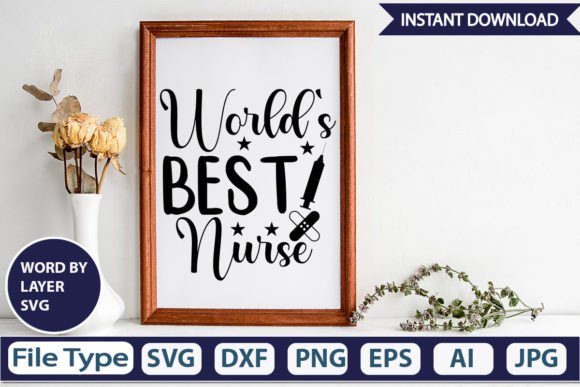
What struck me first was the word-by-layer SVG structure. For anyone who works with embroidery digitizing software, this is a practical gift. You are not stuck with a single flattened shape. You can isolate each letter, each element, and adjust stitch angles, densities, and pull compensation independently. That matters enormously when you are preparing a machine embroidery design for real production, not just a mockup.
First Impression: Mood, Shape, and Visual Personality
The design carries a warm, celebratory tone without tipping into cartoonish territory. The lettering is the star here. It reads like a badge of honor, something a nurse would feel proud to see on a garment or accessory. The composition feels balanced, with enough breathing room around the words to avoid a cramped stitch field. In my experience, that kind of spatial restraint is what separates a digital embroidery file that stitches out beautifully from one that turns into a dense, puckered mess.
When I pulled the SVG into my digitizing software, I immediately noticed how the layered structure let me assign different stitch types to different parts of the design. The main text could take a smooth satin stitch for a polished, professional sheen. Any accent shapes could be handled with a lighter fill stitch to reduce bulk. The word-by-layer format meant I could also tweak the stitch density independently for each section, which is crucial when you are planning to stitch on something like a cotton tote bag that has a pronounced fabric texture.
Where This Design Earns Its Keep
I tested the World s Best Nurse SVG Cut File on three different base materials: a midweight cotton tote, a soft fleece sweatshirt, and a linen kitchen towel. Each one revealed something useful about the design's real-world performance.
On the tote bag, the design held its clarity beautifully. I used a medium-weight cutaway stabilizer and a 75/11 embroidery needle, and the lettering came through crisp and legible. The tote bag design application felt natural, almost like the file was made for it. The size fit comfortably within a 5x7 hoop, though I had to double-check my placement to avoid the side seams. A hoop size of at least 5x7 is what I would recommend for most uses, though you could scale it down slightly for a 4x4 if you are careful about the smallest letter details.
On the fleece sweatshirt, I had to pay closer attention to stabilizer choice. Fleece has a nap that can swallow fine stitches, so I used a water-soluble topping in addition to a cutaway backing. The design held up well, but I would caution anyone working with highly textured or stretchy fabric to test first. The word-by-layer structure gave me the flexibility to increase the stitch width on the lettering by a fraction of a millimeter, which made all the difference on the plush surface.
The linen towel test was revealing in a different way. Linen has a looser weave, and designs with very fine details can get lost. Here, the boldness of the lettering worked in my favor. The words stayed distinct, and the embroidery looked intentional rather than swallowed. I used a tear-away stabilizer and kept the stitch density moderate to avoid pulling the fabric threads apart.
Small Details, Big Impact on Customer Perception
When you sell a handmade product or a custom apparel piece, the buyer is not just looking at the design. They are looking at the crispness of the edges, the evenness of the stitch tension, and the way the thread catches the light. The World s Best Nurse SVG Cut File has a straightforward, confident layout that minimizes the risk of those small imperfections that can cheapen a finished piece. The lettering does not have overly intricate serifs or hairline connectors that would be prone to thread breaks during a running stitch pass.
I also tested the design in a black-and-white mockup, which is a habit I picked up years ago. Removing color forces you to see the design purely in terms of shape and contrast. Under that lens, the composition still worked. The proportions were solid, and the negative space felt intentional. That is a good sign for anyone planning to use this as a printable mockup or a design asset in their shop listings. It also means the design will read well on both light and dark fabric backgrounds, provided you choose thread colors with enough contrast.
Where You Should Use This Design Carefully
No design is universally foolproof, and this one is no exception. I would be cautious about using the World s Best Nurse SVG Cut File on curved surfaces like caps without adjusting the digitizing for the curvature. The lettering is horizontal and fairly wide, which means it could distort on a structured cap if you do not account for the arc. It is doable, but you will want to test on a scrap cap crown first.
Products that endure frequent washing, such as baby bibs, kitchen towels, or everyday apparel, deserve extra attention to stitch quality and thread choice. I always recommend polyester embroidery thread for items that will see repeated laundering, and a good quality backing stabilizer is non-negotiable. For baby embroidery projects, make sure the back of the embroidery is smooth and free of any scratchy threads that could irritate sensitive skin.
If you are stitching on thin fabric like a lightweight jersey or a delicate pillow cover, use a lighter stitch density and a soft mesh stabilizer. The design's bold shapes are forgiving, but any dense embroidery on thin material risks puckering if you rush the hooping process.
Real Talk on Licensing and Commercial Use
Here is where I need to be straightforward. The product listing states that this is a digital download with SVG files provided word by layer. It is not an embroidery file ready to load onto your machine. You will need to digitize it yourself or hire a digitizer. What you get is a clean vector graphic that serves as excellent source material for creating your own embroidery file.
As for commercial embroidery use, I always advise makers to check the license terms directly with the seller before selling finished products. The product description mentions the file format and digital delivery, but it does not spell out the commercial license scope in detail. If you are an Etsy seller, a small shop product creator, or a craft business owner planning to use this on items you sell, confirm that the license covers physical finished products, not just personal use. The same applies if you plan to use the design in design assets for your own digital products or printable mockup previews.
How This Fits Into a Craft Business Workflow
From a production standpoint, the World s Best Nurse SVG Cut File slots neatly into a craft business workflow. The word-by-layer structure saves time in the digitizing phase because you can map stitch types to layers without manually separating elements. For a personalized gift order, you could also add a nurse's name or a unit number beneath the main design, using the same visual style to maintain brand consistency.
I have seen designs like this perform well on embroidered patch projects, apron fronts, sweatshirt embroidery placements, and even holiday embroidery gift sets. Imagine a set of embroidered tea towels packaged together as a holiday gift for a nursing team. The recognition factor is instant, and that kind of giftability drives repeat orders. Buyers connect with the sentiment, and when the stitching looks professional, they trust your shop enough to come back.
Practical Designer Notes Before You Stitch
If you are an experienced embroiderer, you already know the drill, but I will say it anyway. Test the design on scrap fabric first. Check the thread color contrast against your base material. Review the stitch density after digitizing, especially if you scaled the design up or down. Inspect the small details at actual size, not just zoomed in on your screen. And run a test stitch on both light and dark backgrounds to see how the design shifts visually.
For those working in the Graphics and Crafts space, this SVG file also has value beyond embroidery. You can use it for sublimation prints, vinyl cutting, or screen printing, but since my focus is embroidery, I will stick to what I know. The vector quality is clean, and the layered structure translates well to other craft applications if you ever branch out.
Would I Use It Again for Client Projects
After the tote bag order was delivered, I received a photo from the hospital auxiliary coordinator. The nurses were holding up their bags, and the embroidery caught the lobby light in a way that made the lettering look almost dimensional. That is the kind of result that makes a design worth keeping in your library. The World s Best Nurse SVG Cut File is not a magic fix for poor digitizing or sloppy hooping, but if you do your part, it delivers a clean, emotionally resonant finished product that people genuinely want to own.
For embroidery designers, small business owners, and handmade shop owners looking for a nurse appreciation design that strikes the right balance between warmth and professionalism, this file is a solid choice. It respects the craft, it gives you control over the technical details, and it results in an embroidery project that feels personal without looking amateurish. That is a combination worth having in your toolkit.