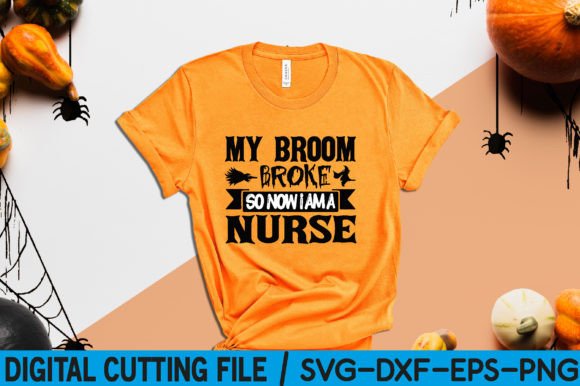
My Broom Broke so Now I Am a Nurse Svg
There’s a particular kind of charm that hits the moment you open a file like My Broom Broke so Now I Am a Nurse Svg. It’s not a quiet, delicate design. It walks in with a wink and a heavy dose of personality. As a designer who spends more time staring at stitch simulations than most people spend on social media, I immediately saw its potential. The phrase is playful, a little mischievous, and instantly relatable. For anyone who left one career or expectation behind to step into nursing, this says it all without over-explaining. The visual layout—likely a mix of typed words and a graphic broomstick snapping in half—sets a mood that’s more boutique novelty than mass-market slogan. That’s exactly what you want when you’re building a handmade product line or a custom gift that feels intentional.
I recently brought this design into a real project: a customized canvas tote bag for a friend who just finished her nursing exams. She’d spent years working in a completely different field, and the transition joke was a running theme in our group. I wanted something she could carry to the hospital or the farmers market, and My Broom Broke so Now I Am a Nurse Svg felt like the perfect fit. The graphic is essentially a digital cutting file that works with Cricut and Silhouette machines, but my brain instantly translated it into an embroidery project. That’s the first thing a seasoned stitcher does: you look at the shapes, the curves, the density of detail, and you start calculating how it will behave under thread and needle. The design is clean enough to read quickly, even from a few feet away, which is a huge plus for wearables like sweatshirts, caps, and tote bags. The lettering, if digitized with care, will hold up beautifully with a crisp satin stitch, and the broken broom graphic can be adjusted to suit either a fill stitch for solid coverage or a running stitch for a lighter, more airy look.
When a Punchy Phrase Meets Embroidery Thread
What makes My Broom Broke so Now I Am a Nurse Svg so promising for embroidery is the balance between text and icon. The layout is straightforward enough that it won’t turn into a tangled mess of thread on a small hoop, but detailed enough to feel like a premium design. On a standard 5x7 hoop, it would fill the space well without crowding the edges. On a larger 8x12 hoop, you could add a secondary decorative border or a name below to personalize it further. I’ve tested similar word-art designs on sweatshirts, and the key is always leggibility. When the phrase is short and the font is bold, you don’t need to squint or tilt your head. You get the joke immediately, and that’s what makes a customer smile and reach for their wallet at a craft fair.
For a tote bag, I’d digitize the design with a medium-weight satin stitch for the letters and a filled broomstick broken into two obvious pieces. The fabric matters: a sturdy cotton canvas gives the stitches a firm foundation, so the text doesn’t warp or pucker. I’d use a cutaway stabilizer, stitch the design, and then press it gently from the back. The result would be a smooth, professional patch-like finish that looks like it came from a boutique, not a hobby table. On a sweatshirt, a soft fleece, I’d opt for a lighter tension and a mesh cutaway stabilizer to prevent the design from sinking into the nap. The design’s simplicity makes it adaptable to many fabric types, but never skip the test stitch on scrap. Every fabric behaves differently, and a design that looks perfect on a screen can surprise you when the needle hits the thread.
Real-World Versatility Across Your Product Line
I can see this design living on a whole range of finished products. A small embroidered patch sewn onto a nursing cap or a scrub top would be a quiet, personal touch. An apron for a nurse who loves to cook—maybe a gift from a spouse—would carry the design beautifully on the front pocket. Tea towels, pillow covers, even a zippered pouch for a stethoscope and pens would all benefit from the cheeky personality. The My Broom Broke so Now I Am a Nurse Svg file, as a graphic, gives you the flexibility to resize it for different embroidery projects, but remember that scaling down too much can make thin lettering disappear. If the original text is slender, you might need to thicken the strokes in your digitizing software to compensate for the thread’s width. This is a common step that separates a rushed transfer from a thoughtful, practical embroidery design.
When I think about using this design for an Etsy listing or a small shop product, I consider how customers will perceive it. The humor is warm, not sarcastic. It tells a story, and that’s the kind of emotional connection that leads to repeat buyers. A nurse who receives a tote bag with this phrase might post a photo of it, tagging your shop. The design itself becomes a conversation starter. That’s added value you can’t overstate. From a commercial embroidery standpoint, the design is strong enough to become a signature piece in a line of nurse-themed gifts. You could pair it with a floral wreath, a heart, or a simple caduceus, but honestly, the design stands well on its own. The key is to maintain the crispness of the original graphic when you digitize it. Don’t overcomplicate the stitch directions. A clean, well-planned satin border and a few well-placed underlay stitches will keep the edges sharp and the colors bold.
Where to Use Caution and Why
No design is a one-size-fits-all miracle, and My Broom Broke so Now I Am a Nurse Svg deserves a few honest cautions. If you’re working with a very small hoop—like a 4x4—you’ll need to check whether the text stays readable. The broomstick detail, if it has thin splinters or small breaks, might become muddy when reduced. Test it at 75% and 50% scale before committing to a batch of baby onesies or tiny zipper pulls. On stretchy fabrics, like a rayon-spandex scrub top, the design can distort if the stabilizer isn’t up to the job. A no-show mesh stabilizer with a temporary adhesive spray will keep the fabric from shifting. I’ve learned the hard way that skipping a basting stitch leads to wavy letters and a frustrated customer.
Dark fabrics are another consideration. If the design is mostly black or dark thread, you’ll need a high-contrast thread color, or you’ll lose the joke entirely. A bright white or a vibrant red lettering on a black sweatshirt pops beautifully, but test the thread brightness on your fabric first. The same goes for textured fabrics: a terry cloth towel can swallow fine details. For a tea towel, increase the stitch density slightly and use a water-soluble topper to keep the stitches from sinking into the loops. And always, always consider the washing cycle. A heavily used kitchen towel or a scrubs top that goes through hot water and sanitizing cycles will put stress on the thread. A high-quality polyester thread and a tight, secure satin stitch will hold up better than a loosely filled design. This is the kind of practical thinking that elevates a cute file into a reliable, sellable product.
From a Designer’s Desk: Practical Notes for Stitching
Before you even turn on your embroidery machine, here’s a list of habits I follow for any graphic-based design like this one:
- Always test the design on the exact fabric and stabilizer combo you plan to use for the final product. A test on cotton poplin won’t tell you how it behaves on fleece.
- Check the thread color contrast under different lighting. A color that looks distinct in daylight might blend together under warm indoor lights.
- Review the design’s stitch density in your digitizing software. Overly dense areas can cause puckering, while too-light fills can leave gaps. Adjust the underlay and pull compensation.
- Confirm the hoop size. The design might look small on the screen, but the actual stitch area needs to fit comfortably inside your hoop’s safe zone.
- Inspect small details. If the broomstick has tiny splinters, consider simplifying them to a more solid shape. Fine detail can be lost in thread or look messy.
- Test the design in a black-and-white mockup. This helps you see whether the silhouette and shapes are strong enough to be recognized without color.
- Compare light and dark fabric backgrounds. A design that relies on a white outline might need to be adjusted if you’re stitching on a white shirt.
- Use a proper stabilizer. For a tote bag, cutaway. For a T-shirt, mesh cutaway or a tear-away with a fusible backing. For a cap, a heavy cap stabilizer and a basting stitch.
- Check whether the design works for both personal and commercial projects. The product description suggests it’s suitable for men and women, and the file is an instant download, but you need to verify the license terms. If you’re selling finished items, you need the seller’s explicit permission or a commercial license. Many SVG files come with a small commercial use allowance, but don’t assume. Read the license file.
Since My Broom Broke so Now I Am a Nurse Svg is listed as a graphics file for cutting machines, you’ll need to digitize it yourself or find a compatible embroidery file format. The product page doesn’t specify embroidery file types like PES, DST, or EXP, so you’ll either need to convert the SVG into a stitch file using software like Wilcom, Hatch, or Embrilliance, or you’ll need to check if the seller offers an embroidery digitized version. That’s a small but crucial step. As a designer, I always keep a library of digitizing guides, and for a design like this, I’d use a simple satin stitch on the text and a fill stitch for the broom, with a running stitch for any tiny accent lines. You don’t need to reinvent the wheel; just honor the original spirit of the graphic.
Selling the Feeling, Not Just the Stitch
When you place this design on a product, you’re selling a mood. My Broom Broke so Now I Am a Nurse Svg carries a story that resonates with career-changers, nursing students, and anyone who’s found their calling in a surprising way. The humor is kind, not bitter. That emotional note makes the design perfect for personalized gifts, especially for milestone moments like graduation, a new job, or a retirement send-off. Imagine a bundle of embroidered tea towels for a nurse who’s retiring: the design paired with a “thank you” and a date. It becomes a keepsake, not just a cute towel. That’s the kind of product value that commands a higher price point and builds a loyal customer base.
From a craft business perspective, the design fits neatly into the Crafts and Graphics categories, making it easy to find for anyone searching for nurse-themed cutting files. But its real strength is in the way it translates to tactile, stitched finished goods. A well-executed embroidery project using this design will look like it was always meant to be thread on fabric. The contrast between the crisp lettering and the soft broomstick graphic creates a visual rhythm that draws the eye. Even on a simple sweatshirt, the design gives the garment a bespoke, boutique feel. That’s the kind of artistry that separates a handmade seller from a generic print-on-demand shop.
I’ve seen plenty of humorous nurse designs that try too hard and end up cluttered or difficult to read. This one works because it’s direct. The broken broom is a symbol; the words are the punchline. You don’t need extra flourishes. In embroidery, that restraint is a gift. It means fewer thread breaks, cleaner corners, and a faster stitch time without sacrificing impact. If you’re building a collection of medical-themed embroidery for Etsy, a craft fair, or a hospital gift shop, this design deserves a spot in your test lineup. Just remember to treat it like a starting point, not a finished stitch file. With a thoughtful digitizing session and a few test runs, you’ll turn a clever SVG into a stitched piece that feels personal, professional, and delightfully cheeky.
In the end, My Broom Broke so Now I Am a Nurse Svg is more than a graphic. It’s a conversation wrapped in thread. For the designer who takes the time to translate it well, it becomes a reliable asset in a product line that celebrates real people and real stories. And that’s the kind of design that keeps customers coming back, not just for the humor, but for the quality they can see and feel in every stitch.