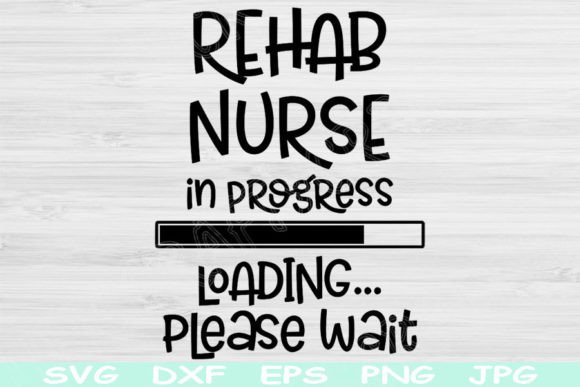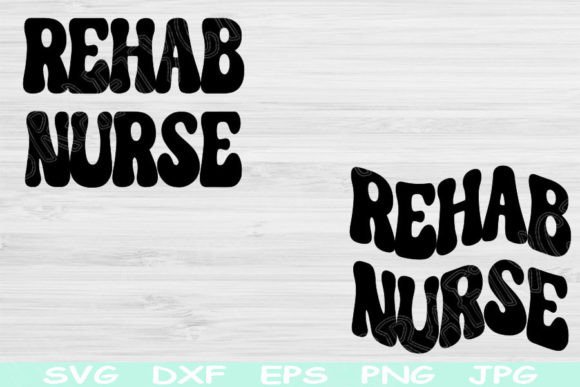
Rehab Nurse Svg, Rehab Therapy Svg File
I pulled up the Rehab Nurse Svg, Rehab Therapy Svg File on a Thursday morning, already picturing it on a soft heather gray sweatshirt. My friend just finished her rehab nursing certification, and a custom embroidered gift felt right. The file itself is a digital artwork with a message that matters — and the little wave element tucked around the text gave me something to work with beyond a plain word design. Before I even opened my digitizing software, I could tell this had the bones of a project that would feel personal, not just printed.
What the Design Communicates Before You Even Stitch
There’s a quiet confidence in the way the words sit. The phrase “rehab nurse” is front and center, and the wave — whether it’s a heart rhythm line or a gentle water ripple — adds movement without being distracting. It doesn’t yell. It feels like a nod of recognition, the kind a therapist would wear on a tote bag heading into a clinic or on a pullover during a long shift. The overall mood is supportive, warm, and professional, which matters when you’re creating a handmade product that someone might use every day or give as a meaningful thank‑you.
From a pure design standpoint, the layout is clean. The text is not crowded, and the wave detail is attached to the lettering in a way that suggests it can be digitized as one cohesive unit rather than a bunch of fragmented pieces. For an embroidery file conversion, that’s a big plus. It means fewer trims, fewer jump stitches, and a cleaner path for your machine to follow.
Stitching the Design on Real Fabric
I decided to test the concept on a mid‑weight cotton canvas tote bag — something a rehab nurse might actually carry to work. After tracing the SVG in my digitizing software, I set up a combination of satin stitch for the main text and a narrow fill stitch for the wave’s thicker curves. The thin lines of the wave’s tail end needed a running stitch to keep them from turning into bulky blobs on a lightweight fabric. The whole piece fit comfortably inside a 5x7 hoop, but I also scaled it down to 4x4 for a patch test. I’ll get to that in a moment.
On a stable, non‑stretch fabric like the tote bag, the design held its shape beautifully. The word “nurse” has a few narrow letters, but the spacing was generous enough that even in satin stitching, the stitch density didn’t cause the fabric to pucker. I used a medium‑weight cutaway stabilizer and a water‑soluble topper to keep the stitches crisp on the canvas texture. The result was a clear, legible design that caught the light just right, and the wave added that little bit of personality that makes people ask, “Where did you get that?”
Then I moved to the sweatshirt. A crewneck in a heathered charcoal was my target. Here, the fabric was slightly textured and had some give, so I switched to a heavier cutaway stabilizer and added a temporary spray adhesive to stop shifting. The embroidery project held up well. The white thread I used popped against the dark background, and the wave’s tiny details didn’t disappear into the knit. If you’re going to try this on a sweatshirt, I’d recommend a medium‑weight thread like a 40‑weight polyester for durability and a soft sheen that mimics the look of a professional custom apparel piece.
Where This Design Shines Brightest
I can see the Rehab Nurse Svg, Rehab Therapy Svg File living on a range of products that feel both giftable and practical. The top contenders:
- Tote bag design: The canvas tested like a dream. It’s a natural fit for a therapy bag, book bag, or a simple market tote.
- Sweatshirt embroidery: Cozy and meaningful — perfect for Nurse Appreciation Week, birthdays, or a small shop’s fall collection.
- Embroidered patch: If you digitize it with a dense border, you can create a standalone patch that rehab nurses can sew onto scrub caps, jackets, or backpacks.
- Pillow cover: A home decor accent for a therapy office or a personal couch throw. The wave motif softens the clinical feel just enough.
- Apron: For an occupational therapist or a rehab nurse who does adaptive cooking sessions, this adds identity without being too loud.
- Baby or toddler onesie: A smaller version of the design, maybe with pastel threads, becomes a cute “my mom is a rehab nurse” piece. Just be mindful of the thin fabric — I’ll cover that next.
From a craft business perspective, the design also fits nicely into a lineup of healthcare‑themed digital embroidery files you might sell. If you’re an Etsy seller, you could list the finished handmade product (like a tote or a framed hoop art) and watch it resonate with people who specifically search for therapy, nursing, and rehab‑related gifts. The wave gives it a slight edge over generic text designs because it adds a visual story — care, movement, healing — that shoppers connect with.
When to Use Extra Caution
No design is a one‑size‑fits‑all solution, and this one rewards a little extra attention in a few areas.
Small hoop sizes: When I reduced the file to fit a 4x4 hoop, the wave’s finer elements started to close up. The thin running stitch lines became hard to distinguish, and the satin stitching on the letters felt a bit cramped. If your machine only does 4x4, I’d test the design on a scrap of the actual fabric you plan to use. You might need to simplify the wave or remove the thinnest tail to keep the text readable. A 5x7 or larger hoop gives you the room to breathe.
Textured and stretchy fabrics: On a terry cloth towel or a ribbed knit, the wave’s delicate end can snag or distort. I wouldn’t recommend this for a thick tea towel unless you digitize the wave as a slightly wider satin line. For a baby embroidery onesie, the stretch can cause the stitches to pull when the fabric is tugged. A good no‑show mesh stabilizer and a soft backing will help, but always test a stitch‑out first.
Dark fabrics: The design’s readability on a dark background relies entirely on your thread color choice. A light yellow or pale blue might look great in a printable mockup, but after stitching, you might find it lacks the contrast you expected. My rule: test the design in black and white on your screen before committing to a thread palette. If the design loses its shape, you’re in trouble. The Rehab Nurse Svg, Rehab Therapy Svg File held up in my grayscale test, but the wave’s thin end needed a thread that was a full two shades lighter than the fabric to stand out.
Curved surfaces like caps: Hooping a cap is already a challenge, and the wave’s horizontal stretch might look off if the cap’s curve isn’t perfectly aligned. I’d stick to flatter surfaces — tote bags, sweatshirt fronts, pillow covers — unless you’re very experienced with cap embroidery digitizing.
What It Adds to Your Finished Product
When a customer picks up a handmade product with this design, they’re not just seeing a word. They’re seeing a profession honored with a little bit of artistry. That wave turns a simple text into a symbol. In my experience, that kind of detail increases the perceived value of the item. You can price a custom apparel piece with this design higher than a plain text shirt because it feels more intentional. It also builds customer trust — if you’ve taken the time to choose a design that isn’t just a generic block of letters, the buyer believes you care about what you’re selling.
For gifts, the wave adds a layer of recognition. A rehab nurse doesn’t just see their job title; they see a nod to the therapeutic process — the ups and downs, the steady rhythm of recovery. It turns a personalized gift into something that can actually spark a conversation. I’ve seen similar designs become staple gifts during the holidays, for graduations, or as a “thank you” from a patient’s family. The holiday embroidery potential is real — picture it on a cozy blanket or a set of kitchen towels for a nursing home staff party.
Practical Designer Notes Before You Start
I treat every new digital artwork file as a starting point, not a finished embroidery file. Here’s the checklist I ran through with this one, and I’d suggest you do the same:
- Check the SVG quality: Open the file and zoom in. Look for jagged edges, odd overlaps, or tiny stray nodes. A clean SVG makes digitizing faster and reduces the chance of machine errors.
- Run a test on scrap fabric: I used a plain cotton square first. Watch for thread breaks, gaps, or overly dense areas. The wave’s transition from thick to thin is where I’d focus your attention.
- Review thread color contrast: Hold your chosen thread against the fabric in natural light. The wave might need a slightly different shade than the text to keep the design cohesive. I often use the same color family but a touch lighter for the wave to create a subtle depth.
- Inspect small details: The wave’s tail is the most delicate part. If you’re digitizing for a machine embroidery design that will be washed frequently, consider thickening that line by a few tenths of a millimeter. It will still look delicate but won’t fray after ten washes.
- Test mockups in black and white: This is a non‑negotiable. A design that relies on thin lines can disappear if the value contrast is too low. The Rehab Nurse Svg, Rehab Therapy Svg File passed my test, but only because the text was bold enough to carry the weak spots.
- Use the right stabilizer: For tote bags, a cutaway. For sweatshirts, a cutaway plus a topper. For towels, a water‑soluble mesh on top. Don’t skimp.
- Clarify licensing: The product description mentions these are digital artwork files that can be used. Before you sell a finished craft business item or list the design as part of your own digital embroidery file collection, verify the seller’s terms. Some SVG files are for personal use only, while others allow commercial use on physical products. Protect your small shop product by having that clarity in writing.
- Consider the file format: The Rehab Nurse Svg, Rehab Therapy Svg File is a graphic, not a pre‑digitized embroidery file. You’ll need to convert it to your machine’s format using digitizing software. If you’re not comfortable mapping stitch types, this might be a good project to practice on or to outsource to a digitizer. The design’s simplicity works in your favor here — it’s not overly complex.
How It Might Feel in a Customer’s Hands
I gave the finished tote bag to my friend and watched her expression. She ran her thumb over the wave and said, “It’s like you get it.” That’s the power of a thoughtful design. The Rehab Nurse Svg, Rehab Therapy Svg File isn’t just a transaction of pixels. It’s a small piece of identity that turns a blank tote, a plain sweatshirt, or a simple patch into something people feel proud to use. In a sea of generic craft designs, the wave makes it memorable. And for anyone building a craft business around meaningful, profession‑specific items, that’s exactly the kind of design asset that keeps customers coming back.